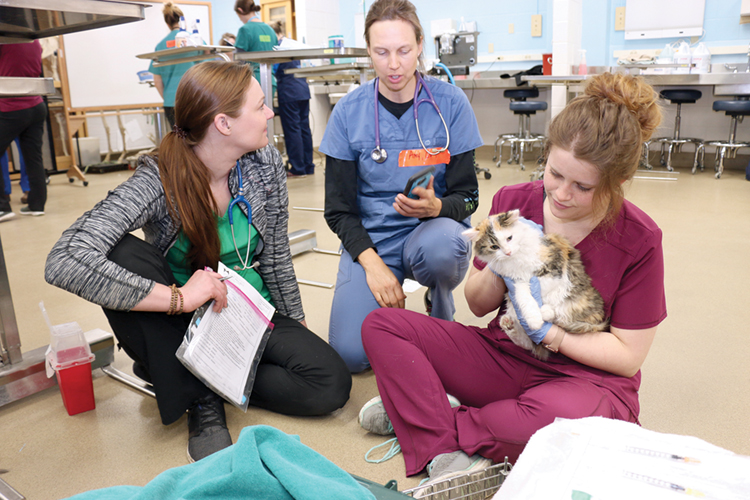
Here's information on the average veterinarian salary for Tennessee. This article will tell you what the average Tennessee veterinarian is paid and how it compares to the market. You'll also learn what skills employers are looking for in a potential vet technician candidate.
The average salary of a Tennessee veterinarian technician
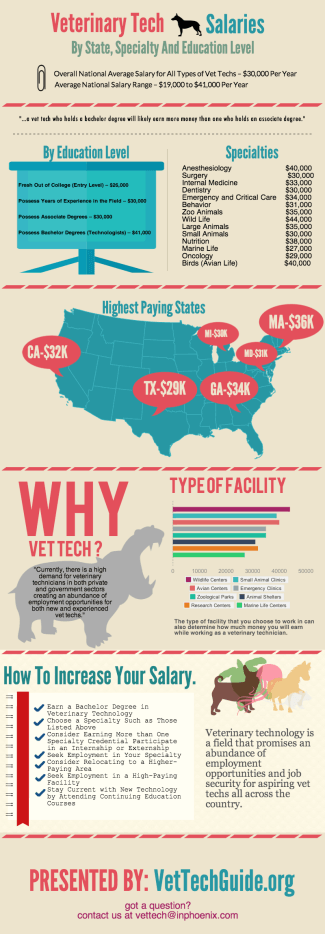
In Tennessee, a veterinary technician makes an average salary of $21,538, but the salary is based on a variety of factors such as location, skills, and years of experience. Tennessee ranks 20th nationally for average veterinary technician salary. ZipRecruiter's continuously updated database of jobs allows you search for available opportunities in your local area and to see what other people are doing.
Tennessee's veterinarian technicians must be licensed to practice within the state. While their scope of practice varies by state, most common procedures must be done under the supervision of a licensed veterinarian. Tennessee law allows veterinary technicians in Tennessee to perform dentistry and float animals' tooth, but only if they are supervised by a licensed veterinarian. Tennessee's managing veterinarians are legally responsible for the professional conduct their employees. This is why they hire only the best technicians.
Tennessee has many job opportunities if you are interested to be a veterinary technie. While the salary for veterinary technicians is modest compared to other occupations, job growth is projected to be high in the next several years. The Bureau of Labor Statistics projects a 15% rise in job openings by 2030. Therefore, veterinary technicians' job prospects are excellent.
Tennessee job outlook for veterinary technicians
The veterinary technician plays a crucial role in animal care. They can work in a rural clinic or at a large organization. They are responsible for monitoring and administering medication. In some cases, veterinary techs may also perform surgery or administer tests. As pet owners are increasing in number, there is a high demand to be qualified technicians.
Although there are few job opportunities in Tennessee, the wages are competitive. A veterinary technician in Tennessee earns an average salary of $23,450. The average salary for a Tennessee veterinary technician is less than the national average. However, living expenses in Tennessee are much lower. This can be a benefit for some.
Tennessee Board of Veterinary Medicine issues a license for veterinary technicians. An apprenticeship program of two to four years in veterinary technology is required before aspiring technicians can apply for a license. They must also pass the exam each year and continue their education to keep their license. Four hours of this training can be done online. The Tennessee Veterinary Technician Association website has information about continuing education classes.

Skills employers want to see on a resume for a veterinary technician
Employers look for certain skills in your resume if you are interested working as a vet technician. These skills include customer care, x-ray knowledge, and animal care. These skills should be emphasized in your resume. These skills can also be highlighted in the summary section.
When working alongside other technicians and veterinarians, veterinary technicians must be a team player. They must also be able and willing to communicate with pet owners. Try to use any previous teamwork experience to make it more tangible. On a home visit, a group of veterinary technicians can show this by working with the veterinarian.
A veterinary tech resume should not only focus on soft and hard skills but also include certifications. A chronological format is best for those with a lot of experience. It will highlight accomplishments and past roles.
FAQ
What is pet insurance?
Pet Insurance offers financial protection to pets in case they are injured or become sick. It also covers routine care such as vaccinations or spaying/neutering.
Additional benefits include emergency treatment in the event your pet becomes ill or is involved in an accident.
There are two types:
-
Catastrophic – This insurance pays for the medical costs of your cat in case of serious injury.
-
Non-catastrophic – This type covers routine costs for veterinary care, including vaccinations, microchips or spays/neuters.
Some companies offer both non-catastrophic and catastrophic coverage. Others only offer one.
To cover these costs, you will have to pay a monthly fee. The amount depends on how much you spend on your pet's care.
The price of your insurance depends on which company is chosen. Make sure to shop around before you buy.
Many companies offer discounts for multiple policies.
You can transfer your pet insurance plan to another company if you are already insured.
If you choose not to purchase any pet insurance, you will need to make all payments yourself.
You can still save money. Ask your veterinarian about discounts.
If you take your pet to the vet often, he might not be impressed.
Instead of spending money on a pet, you could adopt one from an animal shelter.
Remember, no matter what kind of insurance you buy, you must read the fine print carefully.
It will let you know exactly how much your coverage is worth. If you don’t understand something, contact an insurer immediately.
How do I know if my dog has fleas?
If you notice your pet scratching at its fur, licking itself excessively, or looking dull and unkempt, then chances are he/she may have fleas.
Flea infestations may also be indicated if your pet is experiencing redness.
Take your pet to the veterinarian as soon as you can for treatment.
What are three things that you need to consider before getting a cat?
Before you decide to buy a cat, be sure to answer these questions.
-
Does the cat have any health issues?
-
Will the cat eat all my food, or will he?
-
Do I want a cat to love cats or just a pet?
Statistics
- Here's a sobering reality: when you add up vaccinations, health exams, heartworm medications, litter, collars and leashes, food, and grooming, you can expect a bill of at least $1,000 a year, according to SSPCA. (bustle.com)
- It's among a relatively few companies that provide policies with a full (100%) coverage option, meaning you are not responsible for any co-payment of bills. (money.com)
- In fact, according to ASPCA, first-year expenses can sum up to nearly $2,000. (petplay.com)
- It is estimated that the average cost per year of owning a cat or dog is about $1,000. (sspca.org)
- For example, if your policy has a 90% reimbursement rate and you've already met your deductible, your insurer would pay you 90% of the amount you paid the vet, as long as you're still below the coverage limits of your policy. (usnews.com)
External Links
How To
How to teach your cat how to use the litter box
The litter boxes are great for keeping your pet's waste under control, but they can't be used well by cats. They are often too small or just plain wrong for cats to be comfortable in. Cats may end up spreading the litter all over the floor and then leaving it.
To make sure you have the best chance of success when teaching your cat to use the litterbox, here are some things to keep in mind:
-
Make sure the box has enough space for your cat to comfortably stand up straight inside without having to crouch down.
-
You should place it so your cat can go outside.
-
Your cat should have access to water at all times, even if it's not possible. It will make him less anxious about using the box.
-
When you first introduce the box to your cat, try to avoid making sudden noises or movements, especially if he's already been accustomed to being outdoors.
-
Once he gets used to the idea, reward him with praise whenever he uses the box correctly. You might also consider offering treats to your client, but only after you've completed your business.
-
Don't force your cat into using the box; if he refuses to do so, ignore him and leave him alone until he decides to change his mind.
-
Be patient! Be patient! It may take several weeks for your cat to start using the box on a regular basis.
-
If you notice any changes in your cat's behavior, such as aggression towards humans or animals, contact your veterinarian immediately. This could be a sign of a serious condition such as a kidney disease or infection in the urinary tract.
-
Don't forget to clean up after your cat, including the area surrounding the box.